Antiplatelet, Analgesic, and Anti-inflammatory Effects of Piperine are Mediated Through Several Different Mechanisms
DOI:
https://doi.org/10.55627/mmc.004.02.01273Keywords:
Piperine, platelet aggregation, analgesic, anti-inflammatory, arachidonic acid, epinephrineAbstract
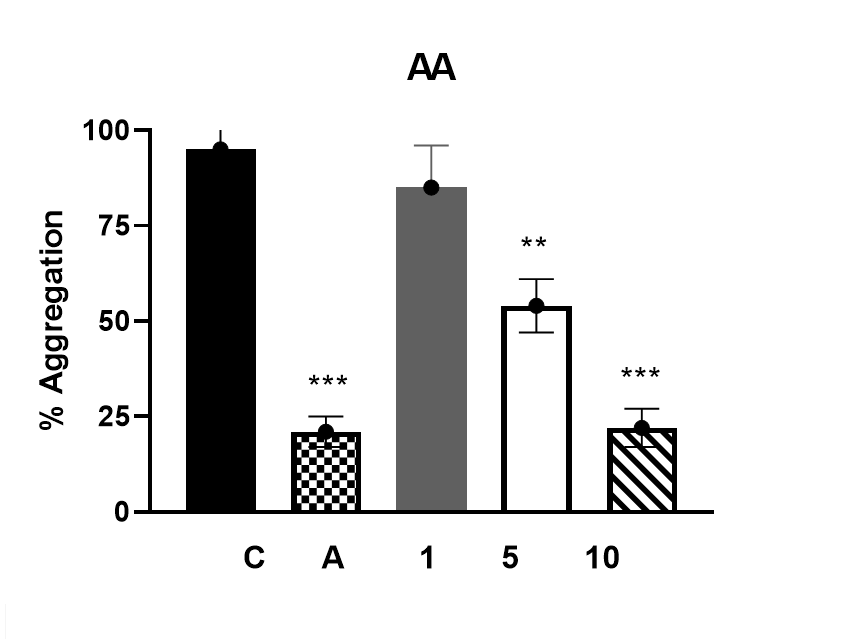
Piperine is a phytocompound found in black and long pepper (Piper nigrum and Piper longum, respectively). It has several important pharmacological properties. The current study aimed to evaluate piperine for analgesic, anti-inflammatory, and anti-platelet activities. The analgesic and anti-inflammatory effects were assessed in mice and rats respectively using acetic acid and formalin-induced nociception, and carrageenan-induced rat paw edema tests. The intraperitoneal (i.p.) administration of the Piperine (10, 50, and 100 µg/kg) produced significant inhibition (P\0.01) of the acetic acid-induced writhing in mice and suppressed formalin-induced licking response of animals. Piperine (10, 50, and 100 µg/kg) produced a marked anti-inflammatory effect in carrageenan-induced rat paw edema assay comparable to diclofenac and produced a dose-dependent (1,5, and 10µM) inhibitory effect against arachidonic acid and adenosine diphosphate-induced platelet aggregation. However, piperine was less potent against the platelet aggregation induced by the platelet-activating factor and epinephrine. These data suggest that piperine possesses peripheral analgesic and anti-inflammatory properties, with potent antiplatelet effects against arachidonic acid and adenosine diphosphate.
References
Downloads
Published
Issue
Section
License
Copyright (c) 2025 Fawad Ali, Syed Majid Shah, Manzoor Ahmad

This work is licensed under a Creative Commons Attribution 4.0 International License.