Gut Microbiota Composition and Its Association with Hydroxyurea Response in Beta Thalassemia Major Patients
DOI:
https://doi.org/10.55627/mmc.004.002.0964Keywords:
Hydroxyurea, Gut microbiota, Hydroxyurea responders, Hydroxyurea-non-responders, 16SrRNA Sequencing, Beta-thalassemiaAbstract
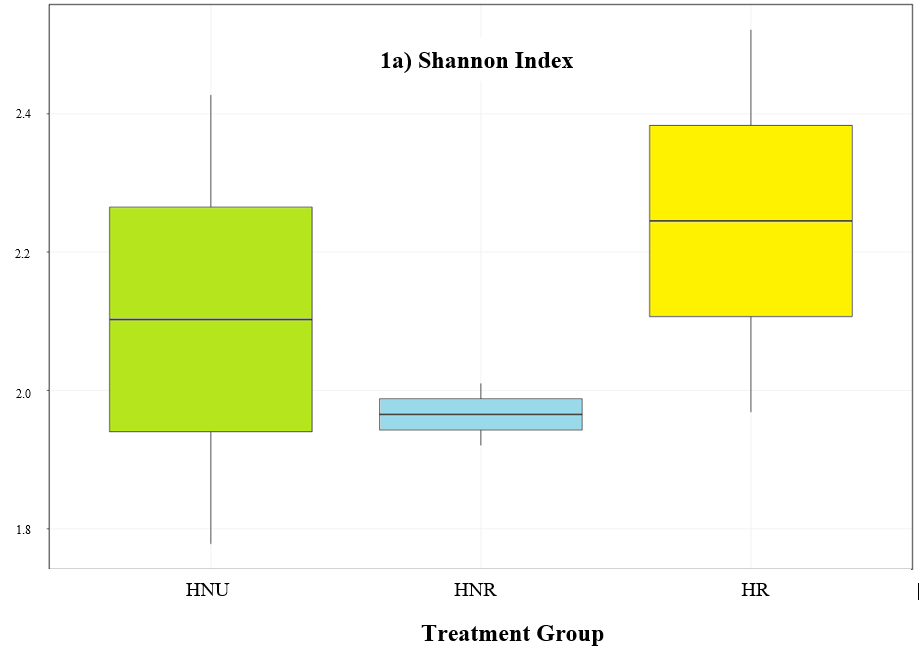
Hydroxyurea (HU), a fetal hemoglobin (HbF) inducer, effectively alleviates symptoms in beta-thalassemia patients; however, its efficacy varies among individuals, potentially due to differences in HU metabolism and gut microbiota composition. Previous research has suggested that both factors can significantly impact drug metabolism and disease progression, including in thalassemia. This study aimed to establish a link between the gut microbiota and HU response in beta-thalassemia major patients. Stool samples were collected from a total of 45 beta-thalassemia patients aged 5-20 years and classified into three groups with 15 patients in each group: responders, non-responders, and those not using HU-based therapy on the basis of transfusion requirement. Notably, HU users tested negative for the Xmn-1 mutation. Sequencing was performed on the V3-V4 hyper-variable region of the 16SrRNA gene. The analysis uncovered noteworthy distinctions in the gut microbiota among the three groups at both the genus and species levels. The response to HU was associated with butyrate-producing bacteria from the phylum Firmicutes. Responders exhibited an enrichment of butyrate-producing bacteria such as Faecalibacterium, Butyrivibrio, Oscillobacter, Gemmiger, and Eubacterium. Non-responders, on the other hand, had higher levels of Prevotella, Mitsuokella, and Treponema. Non-users were characterized by an abundance of Succinivibrio, followed by Bacteroides and Megasphaera. These findings suggest that altered gut microbiota may contribute to inter-individual variation in HU response, highlighting specific microbes that could potentially serve as biomarkers for thalassemia or predict HU efficacy.
References
Downloads
Published
Issue
Section
License
Copyright (c) 2024 Ayesha Khan, Saeed Khan, Saqib Hussain Ansari, Ayaz Ahmed, Asif Iqbal Khan, Muniza Omair

This work is licensed under a Creative Commons Attribution 4.0 International License.