Antidiabetic Potential of Loranthus longiflorus Desr. from Azadirachta indica and Albizzia lebbeck Host Trees: A Cultural Parasitic Medicinal Plant from the Jammu Foothills of Azad Jammu and Kashmir, Pakistan
DOI:
https://doi.org/10.55627/ppc.004.002.0958Keywords:
Diabetes mellitus, traditional ethnomedicine, methanolic extract, hyperglycemia, serum insulin, Loranthus longiflorusAbstract
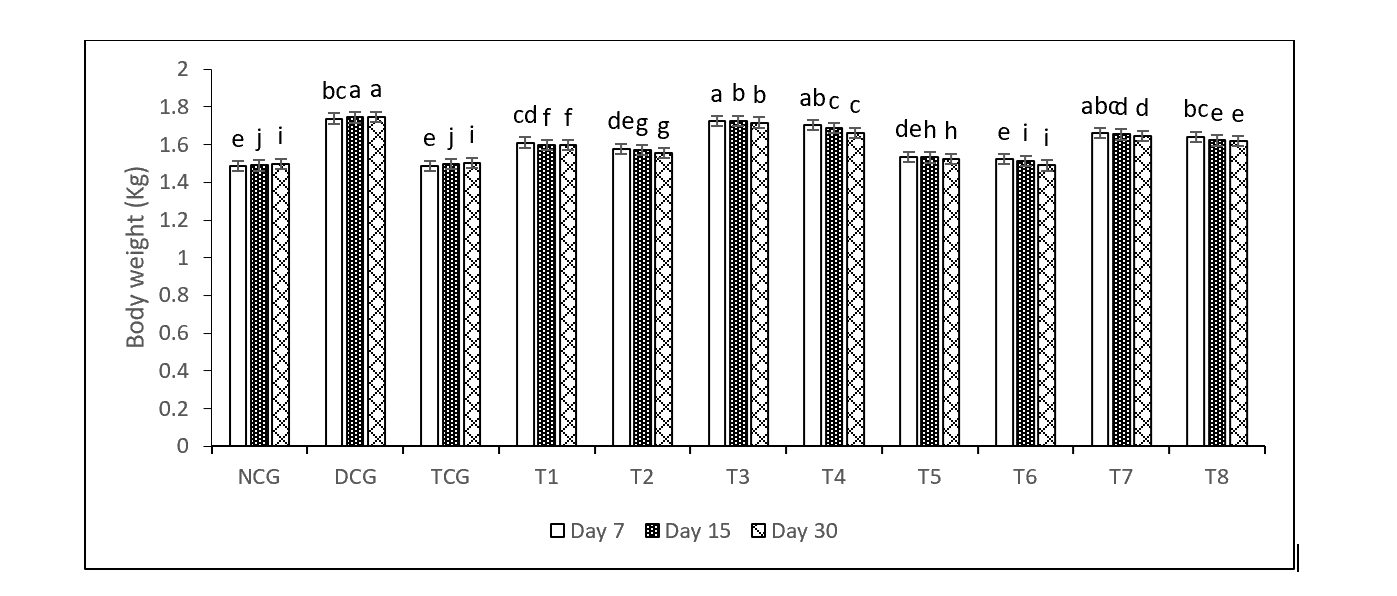
This study explores the comparative antidiabetic potential of Loranthus longiflorus from two different hosts, Azadirachta indica and Albizzia lebbeck, in an alloxan-induced diabetic rabbit model. Prior to assessing antidiabetic efficacy, the plant’s ethnobotanical uses and qualitative phytochemical profile were investigated, revealing alkaloids, saponins, and flavonoids as major secondary metabolites, which were comparatively higher in L. longiflorus taken from A. lebbeck than A. indica. Methanolic leaf and bark extracts were administered orally to diabetic rabbits for 30 days, with blood glucose levels, body weights, and serum insulin profiles evaluated across four groups: normal control (NCG), diabetic control (DCG), treatment control (TCG) with glibenclamide (0.2 mg/kg), and trial group (TG). A 1000 mg dose of L. longiflorus leaf extract from A. lebbeck showed the best antidiabetic activity, reducing body weight and blood glucose levels by 14.74% and 76.43% on day 30, compared to 11.06% and 64.20% reductions with the same dose from A. indica. Additionally, the 1000 mg dose from both hosts significantly elevated serum insulin profiles (p < 0.001). The findings suggest that Loranthus longiflorus, particularly when derived from Albizzia lebbeck, holds significant antidiabetic potential, likely due to its rich phytochemical composition. These results underscore the importance of host-tree influence on the therapeutic efficacy of parasitic plants.
References
Downloads
Published
Issue
Section
License
Copyright (c) 2024 Muhammad Waqas Mazhar, Muhammad Ishtiaq, Mehwish Maqbool, Muhammad Zaheer Ahmad

This work is licensed under a Creative Commons Attribution 4.0 International License.