Tissue Culture Optimization: Maize Callus Induction and Factors Affecting the Callus Efficiency
DOI:
https://doi.org/10.55627/pbiotech.003.02.1288Keywords:
Maize, Tissue Culture, Callus induction, Callus efficiency, Plant Growth Regulators, Protocol optimizationAbstract
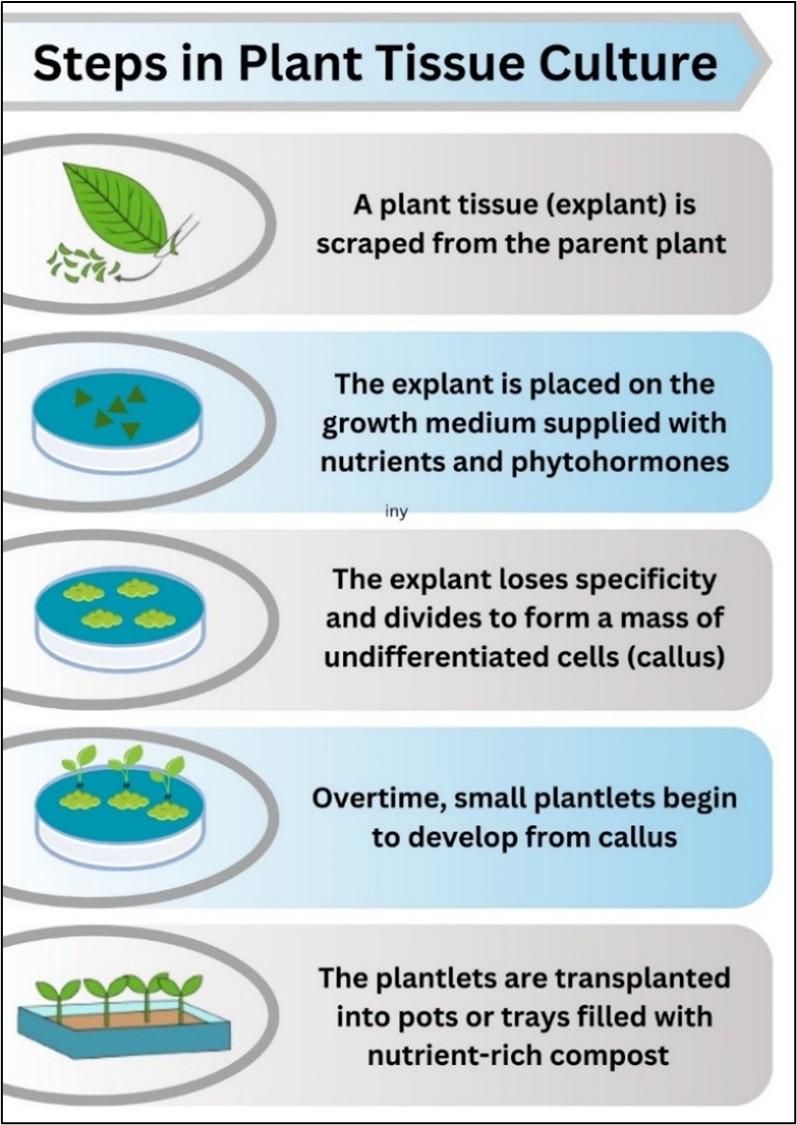
Maize (Zea mays L.), also known as the queen of cereals, is one of the most important food crops in terms of food security, the world economy, and global agriculture. The high yield, diverse climate adaptability, and extensive applications of maize in food, feed, and industrial products make it a highly demanding crop. The traditional methods of maize propagation are slow and often result in less yield with undesired traits due to large-scale variations. However, the advancements in agricultural biotechnology, particularly in plant tissue culture, have made it possible to propagate maize cultures with desired characteristics in in-vitro lab settings. Tissue Culture has enabled researchers to improve crops for rapid propagation, genetic modification, and production of resilient varieties. It has also enabled to development of identical cell lines, through callus induction, to control the gene pool of a specific genotype. Callus induction is the formation of an unorganized mass of cells from an explant in tissue culture settings. Maize tissue culture is performed to develop varieties of improved traits and high yields. Callus induction of maize is a complicated process because different factors influence maize callus induction, particularly the genotypes of maize and the type of explants. Different maize genotypes respond differently to the induction conditions. Some genotypes can easily be cultured while others are difficult to culture. Similarly, different types of explants respond differently to the culture conditions. Immature embryos need different concentrations of plant growth regulators (PGRs) than the leaf explants. This review focuses on the optimized process of maize callus induction in a controlled environment and the effects of different PGRs (auxins, cytokinins, etc.), and factors (explant, genotypes, pH, environmental conditions, etc.).
References
Downloads
Published
Issue
Section
License
Copyright (c) 2025 Muhammad Haris, Sumbal Rasheed, Shahroz Rahman, Ishmal Fatima, Ayesha Mazhar, Dr. Farrukh Azeem (Author)

This work is licensed under a Creative Commons Attribution 4.0 International License.