Multivariate Analysis Reveals Genetic Diversity and Superior Oil Quality Traits in Advanced Mustard (Brassica juncea) Genotypes for Future Breeding
DOI:
https://doi.org/10.55627/pbiotech.003.02.1353Keywords:
Mustard, Principal component analysis , Cluster analysis , Multivariate analysis , Oil contents , Seed yieldAbstract
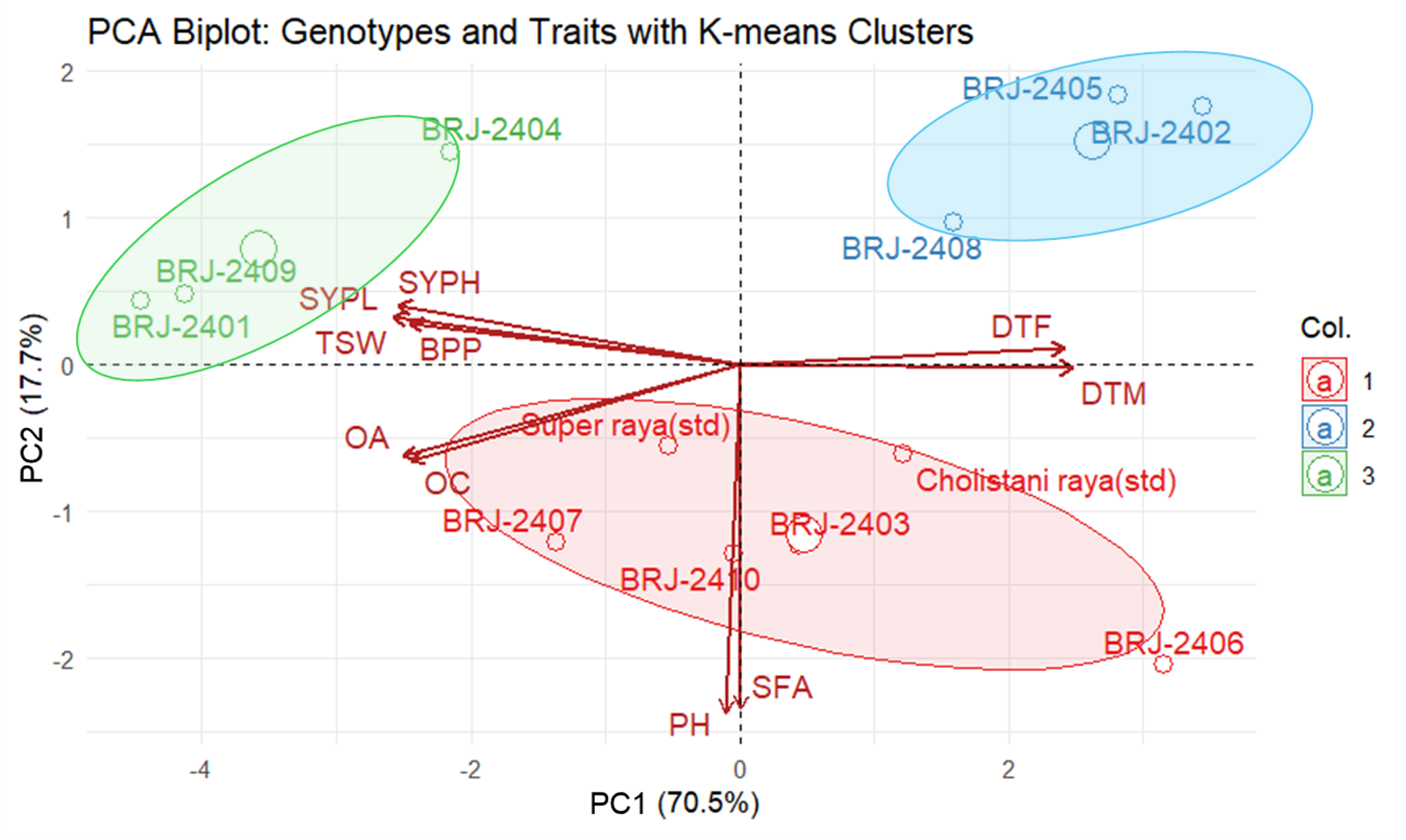
Mustard (Brassica juncea L.) is a vital oilseed crop in Pakistan, valued for its nutritional oil and adaptability to diverse agroclimatic zones. However, limited genetic diversity and suboptimal varieties constrain yield and oil quality, posing a challenge to meet rising demand and reduce edible oil imports. This study evaluated twelve advanced mustard genotypes at the Regional Agricultural Research Institute, Bahawalpur, using a randomized complete block design with three replications to explore agronomic performance and oil quality traits. Key parameters including days to flowering and maturity, plant height, branching, 1000 seed weight, seed yield, oil content, and fatty acid composition were recorded. Multivariate analysis—principal component analysis (PCA) and cluster analysis—were employed to decipher genetic diversity and trait interrelationships. The results revealed significant variation among genotypes for all traits, with PCA and cluster analysis grouping genotypes into three distinct clusters. One cluster included genotypes characterized by taller plants and higher saturated fatty acid content but lower seed weight and oil content, indicating potential biomass producers with lower oil quality. Another cluster comprised genotypes with early maturity and moderate yield traits. The third cluster stood out with higher branching, seed weight, oil content, and oleic acid levels, representing the most promising group for breeding high-yielding, oil-rich mustard varieties. Strong correlations among oil content, oleic acid, and yield traits suggest simultaneous improvement is feasible, though a trade-off with saturated fatty acids exists. The study presents the importance of exploiting genetic diversity in mustard by using multivariate tools to devise breeding strategies to develop stress resilient, high-yielding, and oil superior mustard cultivars for agricultural sustainablility and food security in the counrty.
References
Downloads
Published
Issue
Section
License
Copyright (c) 2025 Sabir Hussain, Muhammad Shah Jahan Bukhari, Imran Akhtar, Muhammad Imran Akram, Saqib Saleem, Muhammad Zia Ullah Ghazali, Zeeshan Hafeez, Asad-ur-Rahman Chaudhary, Muhammad Jahangir Shah, Muhammad Ijaz (Author)

This work is licensed under a Creative Commons Attribution 4.0 International License.