Determination of Acid Value and Saponification Number From In Vitro Callus Cultures of Olive (Olea europaea) cv. Koroneiki
DOI:
https://doi.org/10.55627/pbiotech.003.02.1358Keywords:
Acid Value, Callus Induction, Callus Lines, Olive, Saponification NumberAbstract
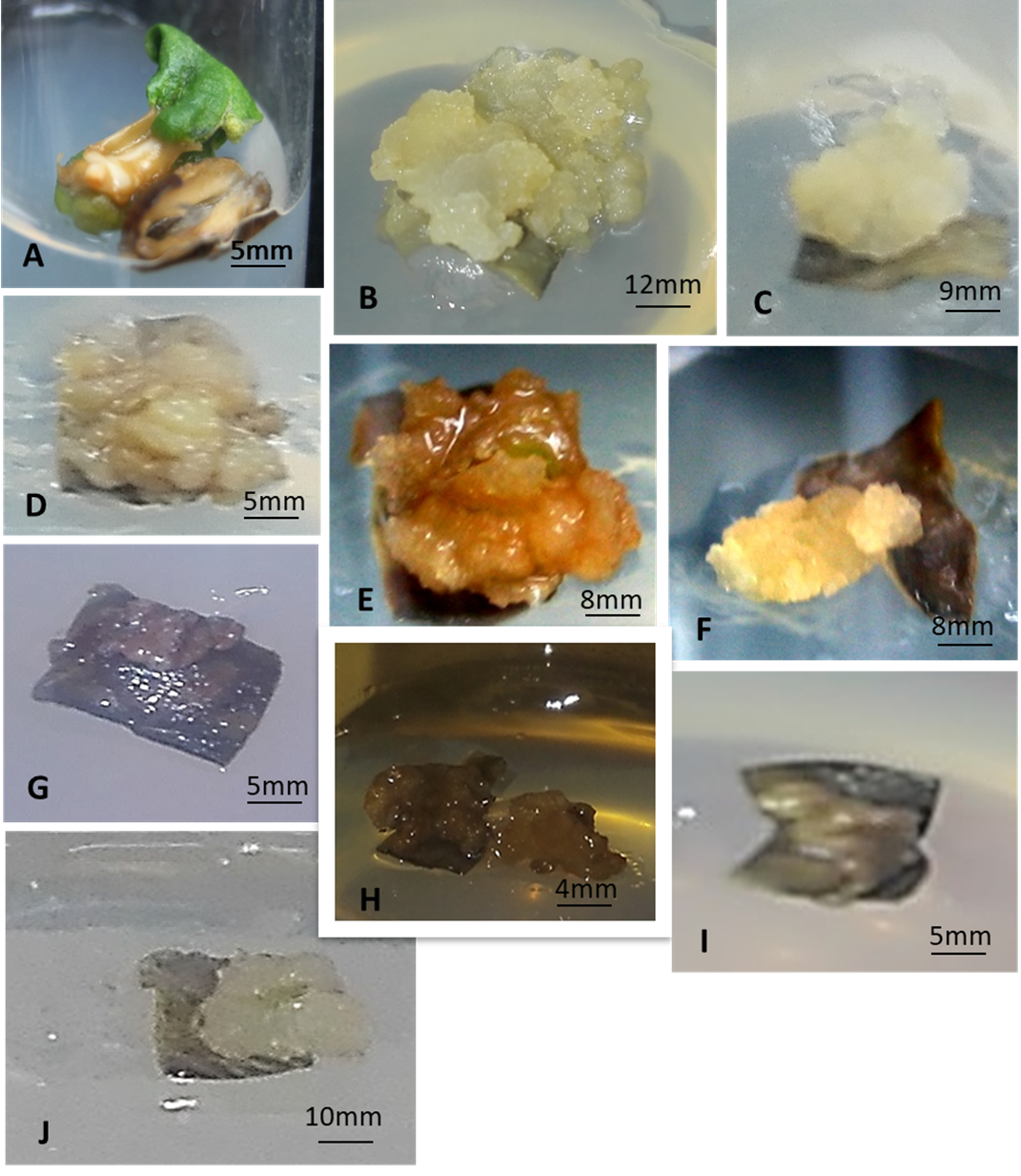
Olive (Olea europaea L.). cv. Koroneiki belongs to the family Oleaceae, which is an evergreen plant of Mediterranean origin. Commonly, this plant is the source of olive oil used for various purposes in human life. To determine the biochemical characteristics of the extracted olive oil from specific callus lines of common olive, we investigated the effects of several hormones on callus induction from field-grown plants. Mature leaves, nodal, and internodal explants were surface-sterilized and inoculated on MS medium. Plant growth regulators in varying amounts were added to MS medium (2,4-D, BAP, IBA, NAA, or TDZ) alone or in combinations, forming a total of 29 treatments for callus induction. The highest (95.45%) callus induction was obtained with 8 + 2 µM BAP + IBA after 35 days of initial culture from leaf explants, followed by 6 µM 2,4-D (75.55%) under the dark culture room conditions. Internode was unable to form callus. Off white, yellowish, fluffy, friable, proliferating calluses were obtained from leaf explants. Such highly proliferating calluses were selected as callus cell lines (CL); CL1 (2, 4-D 4 µM) and CL2 (2, 4-D 6 µM) for oil extraction and subsequent biochemical characteristics of acid value and saponification number. Results demonstrated that CL1 showed the highest acid value (1.25) and saponification number (183). This was followed by CL2, which showed acid values of 1.42 and 1.84, and saponification values of 1.84 and 1.42, respectively. The present study demonstrated an efficient callus induction protocol for subsequent determination of biochemical attributes from the extracted oil of in vitro dedifferentiated olive tissues.
References
Downloads
Published
Issue
Section
License
Copyright (c) 2025 Iqra Jamil, Muhammad Akram, Faheem Aftab (Author)

This work is licensed under a Creative Commons Attribution 4.0 International License.