
Genome‑wide Characterization of AP2/ERF Transcription Factors in Spinach Reveals Candidate Regulators for Nitrogen‑use Efficiency
DOI:
https://doi.org/10.55627/pbiotech.004.01.1747Keywords:
Abiotic stress, AP2/ERF gene family, Expression analysis, Genome-wide analysis, Nitrogen-use efficiency, Phytogenic relationship, Spinacia oleracea L.Abstract
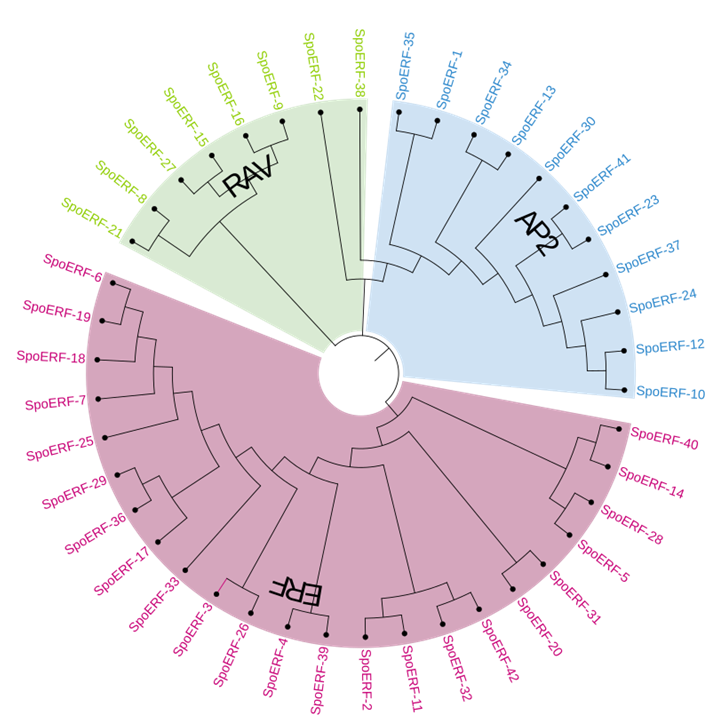
Spinach (Spinacia oleracea L.) is a nutrient-dense leafy vegetable characterized by its rapid growth rate, high antioxidant content, and adaptability to various environmental conditions. The elucidation of the genetic regulatory networks of spinach, particularly the transcription factor families are important for stress responses and are essential for improving adaptability and sustainability. A genome-wide analysis identified 42 member families of the Ethylene Response Factor family gene product. Within each clade, they were classified into three major subclades (AP2, ERF and RAV) consistent with the composition of structural domains. Gene mapping showed an uneven number of SpoERF genes on six chromosomes, many of which were clustered together for an unclear purpose and suggests that tandem duplication is an important mechanism responsible for gene expansion. Gene structure and motif analysis revealed highly conserved AP2 domains but varied intron–exon patterns, which suggest functional diversification. Synteny analysis identified phylogeographically strongly related genes between spinach and Arabidopsis thaliana, probably due to ancient duplication events and the conserved functional elements of the essential ERF regulators. Promoter analysis showed extensive enrichment for many cis-acting elements (Abre, DRE, LTR, W-box, G-box) and revealed involvement of SpoERFs in hormone, developmental, and environmental stress responses among SpoERF family. The findings of this study systematically identify and characterize the AP2/ERF gene family in spinach, revealing their chromosomal organization, evolutionary relationships, conserved structural features, and nitrogen-responsive expression patterns, thereby providing candidate regulatory genes for future functional studies and molecular improvement of nitrogen-use efficiency in spinach.
References
Downloads
Published
Issue
Section
License
Copyright (c) 2026 Abdullah Shakeel, Rabia Irshad, Muhammad Abdullah Hussain, Zahid Khan, Fatima Tu Zahra, Aqib Ali, Syed Din Muhammad, Muhammad Huzaifa Jamil, Ameer Hamza Aslam (Author)

This work is licensed under a Creative Commons Attribution 4.0 International License.




