Pharmacological Potential of Halophytic Mangroves from the Indus River Delta: A Review on Novel Metabolites, Phytochemicals, Challenges and Future Prospects
DOI:
https://doi.org/10.55627/pbiotech.004.02.1802Keywords:
Delta-Arabian Sea, Diversity, Halophytes, Mangroves, Metabolites, Pharmacological activities, PhytochemicalsAbstract
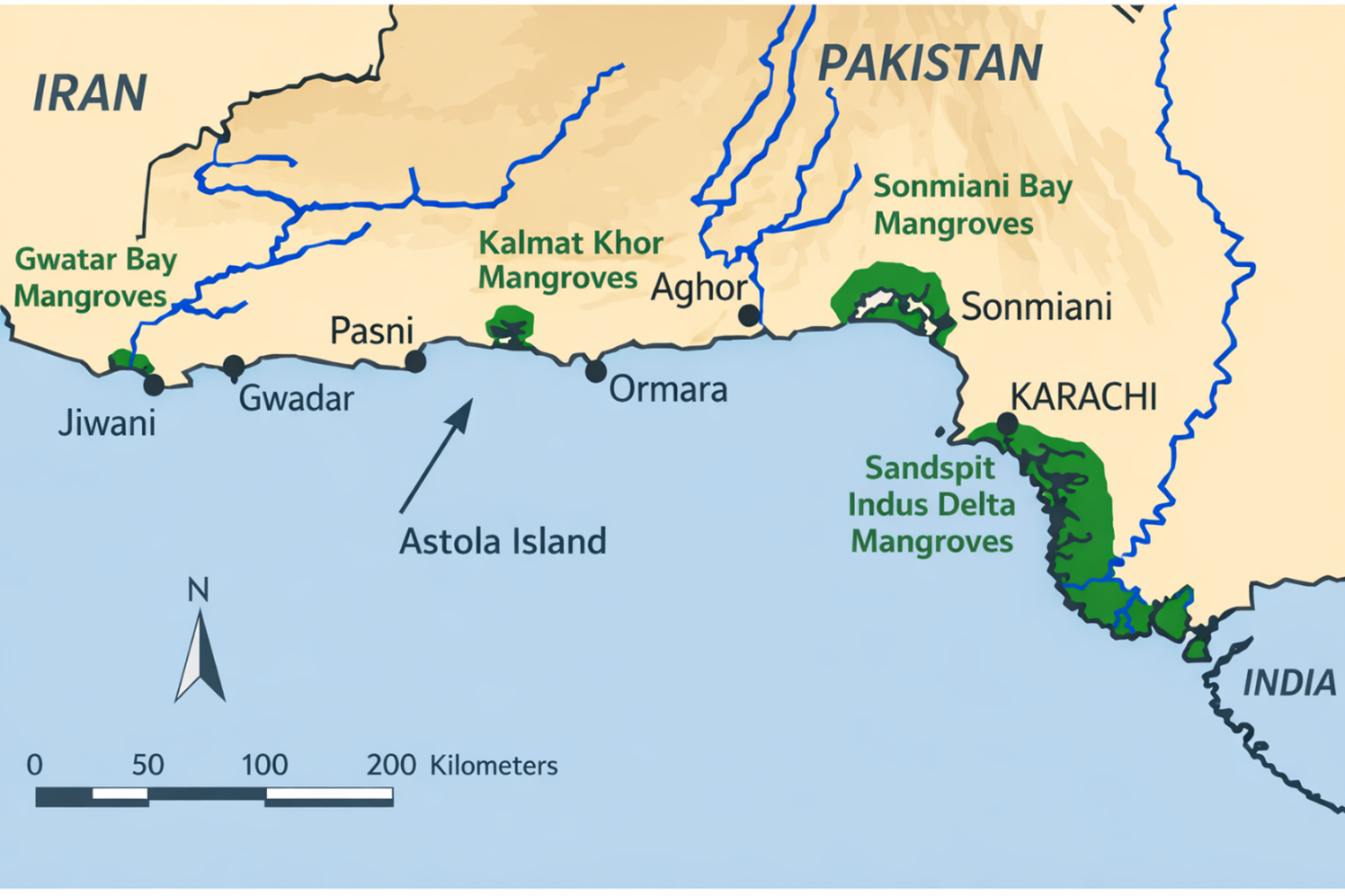
Indus River Delta-Arabian Sea mangroves are among the most diverse and large mangrove ecoregions of the world situated on the coast of Sindh Province, Pakistan. The Indus River forms a massive alluvial fan in this region consisting of mud flats interspersed with channels and fringed with mangrove forests. Indus river delta is a saltier estuary than usual due to salt brought by river from Thar Desert. Only a few biochemically distinct plant species may survive in hostile environments caused by high salt concentrations. A wide range of natural compounds with distinct bioactivity are produced by these salt-tolerant plants. They include active metabolites that belong to several families of chemical compounds, such as steroids, terpenoids, tannins, alkaloids, phenol, etc., and have some unique biochemical structures. Recent research on the pharmacological bioactivities of phytochemicals originating from these halophytic mangrove species is included in this review. The current paper also sheds light on mangroves as a source of several active substances, unique medicines, and agrochemicals.
References
Downloads
Published
Issue
Section
License
Copyright (c) 2026 Kulsoom Zahara, Ambreen Najaf, Yamin Bibi (Author)

This work is licensed under a Creative Commons Attribution 4.0 International License.