Polymorphism in the P2Y12 Gene & Antiplatelet Response to Clopidogrel in the Pakistani Population
DOI:
https://doi.org/10.55627/pmc.001.01.0107Keywords:
Clopidogrel, Platelet aggregation, Antiplatelet, Genetic Polymorphism, Adenosine DiphosphateAbstract
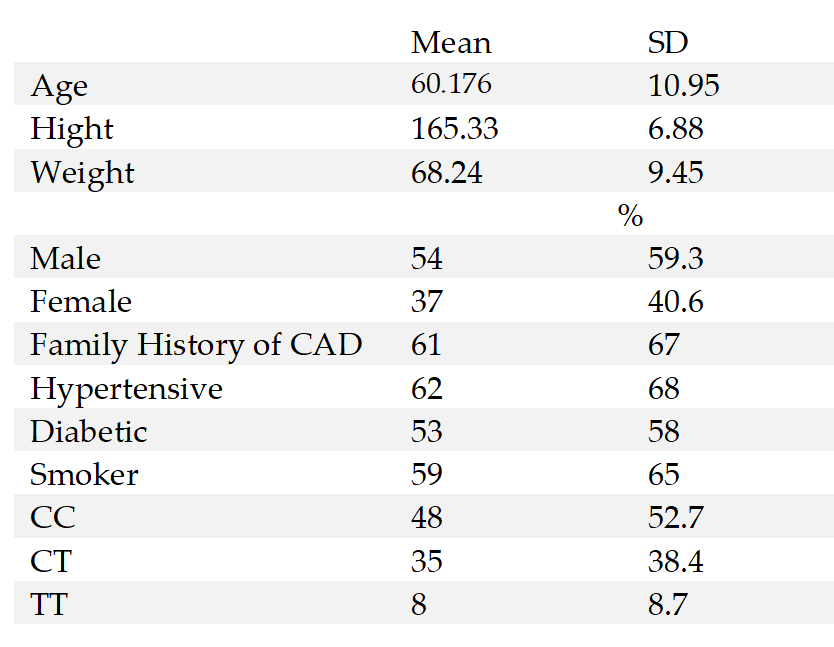
Clopidogrel, an antiplatelet drug, is frequently prescribed to patients with cardiovascular disease and those suffering from a stroke. Despite the drug being effective in most patients, some do not respond to the therapy and experience ischemic events early in the treatment, which might be due to poor platelet inhibition. The current study investigates the association between polymorphism in the P2Y12 adenosine diphosphate receptor (ADP) gene and platelet aggregation in response to clopidogrel in a Pakistani cohort. The study comprised 91 patients diagnosed with cardiovascular diseases and treated with clopidogrel. Antiplatelet response to clopidogrel was monitored by an aggregometer. The genotyping of the T744C genetic polymorphism of the P2Y12 receptor gene was carried out using the restriction fragment length polymorphism polymerase chain reaction method. Our results show that 53% of patients were homozygous for the P2Y12 wild-type genotype, 38% possessed one copy of the T allele, and 9% possessed both T alleles. Mean values of inhibition of platelet aggregation were different in all three groups. However, the differences in the means did not reach statistically significant levels. Therefore, we concluded that our study does not show an association between the T744C polymorphism of the P2Y12 ADP receptor gene and platelet inhibition by clopidogrel.
References
Downloads
Published
Issue
Section
License
Copyright (c) 2021 Precision Medicine Communications

This work is licensed under a Creative Commons Attribution 4.0 International License.