
Evaluation of Pakistani Medicinal Plants Traditionally Used to Treat Leishmaniasis
DOI:
https://doi.org/10.55627/ppc.004.002.01064Keywords:
Medicinal plants, crude extract, phytochemical analysis, antileshmanial activity, PakistanAbstract
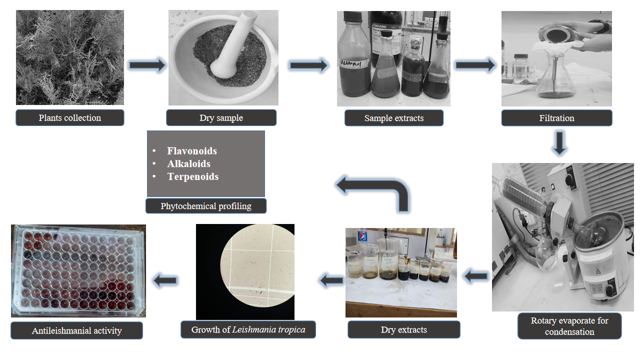
Cutaneous leishmaniasis (CL) is caused by various species of the protozoal parasite Leishmania, affecting approximately ten million individuals globally. CL, which is primarily caused by Leishmania tropica, is most common in Pakistan and has spread throughout the country due to the migration of several million people. Approximately 90% of CL cases have been reported from all provinces of Pakistan. Pentavalent antimonials are the conventional treatment, although they are quite expensive and have several side effects when administered parenterally. Existing chemotherapies can be replaced by reasonable studies on innovative anti-leishmanial medicines. A literature review displayed that no natural compound has been approved against leishmaniasis. Medicinal plants traditionally used to cure Leishmania were collected from various parts of Pakistan. Methanolic extracts and fractions were prepared according to standard methods and tested for important secondary metabolites. Citrullus colocynthis (L.) Schrad (IC50 12.25 µg/mL), Juniperus M. Bieb (IC50 11.97 µg/mL), and Asparagus gracilis L (IC50 10.68 µg/mL) showed strong antileishmanial activity against Leishmania tropica promastigotes. These extracts will be subsequently separated and fractionated. Furthermore, mechanistic research on the isolated compounds from these plants will be carried out in order to discover cost-effective and safe therapies for cutaneous leishmaniasis.
References
Downloads
Published
Issue
Section
License
Copyright (c) 2024 Syed Majid Shah

This work is licensed under a Creative Commons Attribution 4.0 International License.





