
Synergizing Genetic Resistance and Antibiotics to Combat Xanthomonas Blight in Upland Cotton
DOI:
https://doi.org/10.55627/pbiotech.003.02.1206Keywords:
Cotton (Gossypium hirsutum), Bacterial Blight Disease, Xanthomonas axonopodis pv. malvacearum (Xam), Antibiotics, Tetracycline, ResistanceAbstract
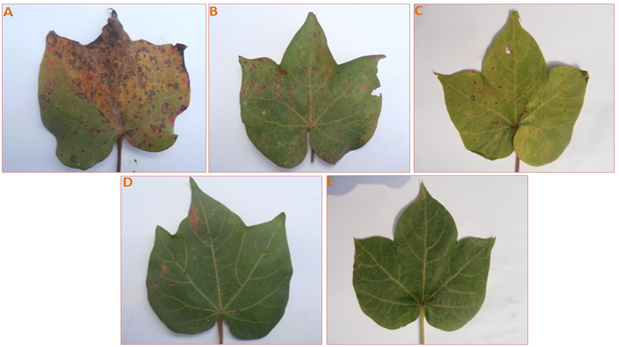
Cotton (Gossypium hirsutum) is an important crop in Pakistan that is used to get fibber and many other industrial products that are helpful in making the country’s economy better. Cotton is attacked by the Xanthomonas axonopodis pv. malvacearum (Xam) causes the bacterial blight disease which is a major worldwide cause in every country. Five different isolates of Xam were used after biochemical characterization and 48 cotton genotypes were screened in the field against Xam and evaluated on the basis of morphological and physiological traits. Out of 48 cotton genotypes none showed an immune response, only 3 genotypes showed a resistant response, 13 genotypes showed a tolerant response, 24 were susceptible to Xam and 7 genotypes were highly susceptible. Two different antibiotics, Tetracycline and Ampicillin were also tested in-vitro on 5 isolates as well as in-planta against one susceptible genotype at six different concentrations for its efficacy. In-vitro test was checked through a spectrophotometer. Tetracycline was found to be most effective even at low concentrations. The susceptible genotype (CIM-591) showed a tolerant response on the application of tetracycline at low concentrations in the field but resistant at high concentrations.
References
Downloads
Published
Issue
Section
License
Copyright (c) 2025 Usman Arshad, Muhammad Usman, Salma Malik, Ayesha Khalid, Zia Ullah Ashraf, Saima Yousaf, Muhammad Ehetisham Ul Haq, Huma Abbas, Muhammad Huzaifa Tanveer, Amjad Abbas (Author)

This work is licensed under a Creative Commons Attribution 4.0 International License.




