
Intelligent Reprogramming of Crops for Resistance Against Emerging Plant Pathogens: From Conventional Breeding to Genome Editing
DOI:
https://doi.org/10.55627/pbiotech.003.03.1496Keywords:
Emerging plant pathogens, Disease resistance breeding, Marker-assisted selection, Genomic selection, Genome editingAbstract
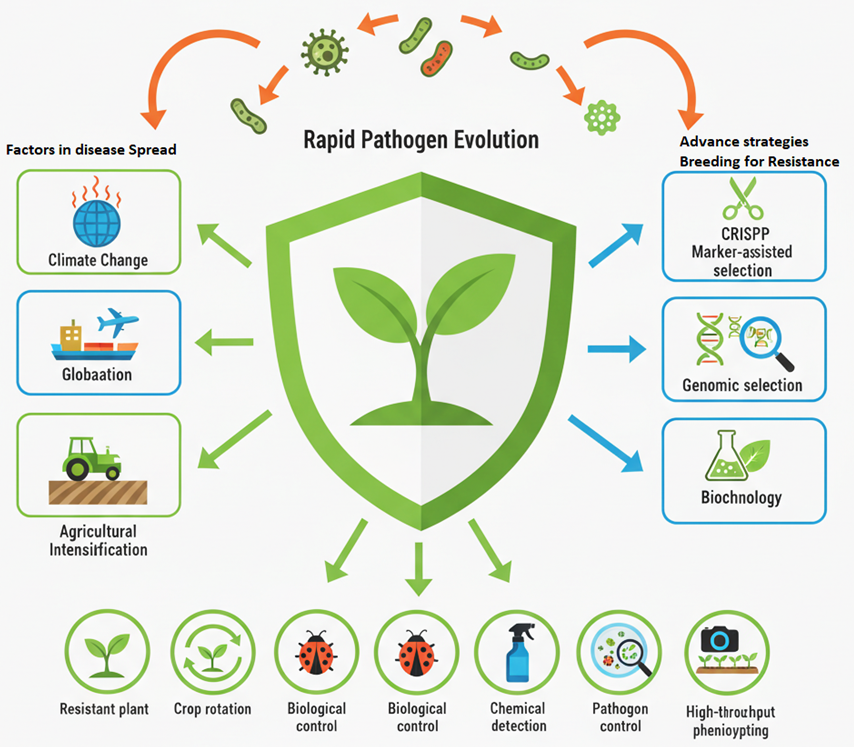
Emerging plant pathogens are threat to global food security. Plant pathogens are rapidly spreading due to increasing globalization, agricultural intensification and rapidly changing climatic conditions. These emerging pathogens are rapidly adapting to overcome host resistance. Therefore, necessitating the development of sustainable disease management strategies. Breeding for resistance is an important approach for sustainable disease management. The advancement in molecular genetics, genomics, and biotechnology have revolutionized the field of breeding for resistance. Precise incorporation of resistant genes into elite cultivars has been possible due to advanced breeding techniques such as Marker-assisted selection, genomic selection, and genome editing tools. However, there are still several challenges in plant breeding. The development of resistant varieties is further complicated by public perception and regulatory hurdles surrounding genetically modified crops. However, using integrated pest management such as resistant varieties along with cultural, biological and chemical control methods can enhance the durability of resistance. The development of resilient crop varieties has been possible with Advances in omics technologies, high-throughput phenotyping, and pathogen detection methods. Besides the development of resilient variety, it is essential to deliver resistant varieties to farmers. International collaboration, open-access breeding networks, and public-private partnerships play important role in delivering the resistant varieties to farmers. Resistance breeding needs to be proactive to face the challenges of emerging plant pathogens and global food security. This review highlights the factors causing spread of emerging plant pathogens, discuss modern approaches, key challenges and future direction of resistant breeding.
Downloads
Published
Issue
Section
License
Copyright (c) 2025 Jabir Asghar, Ameer Jan, Muhammad Hamayun, Khatir Ali, Atiq u Rehman, Mushtaq Ahmed, Izaz Ullah, Abdul Basit, Shaikh Saddam (Author)

This work is licensed under a Creative Commons Attribution 4.0 International License.




