Improving Grain Iron Bioavailability in Bread Wheat Through Integrated Nitrogen and Iron Fertilization
DOI:
https://doi.org/10.55627/pbiotech.003.04.1680Keywords:
Bioavailable iron, Biofortification, Bread wheat, Grain iron, Iron biofortification, Nitrogen application, PhytateAbstract
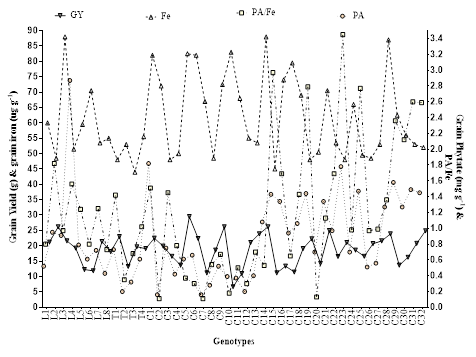
Low nutritional quality of staple foods, including wheat, is the main culprit of iron deficiency in more than half of the world's population. Modern breeding techniques have improved the yield potential of staple food crops, especially wheat, but the nutritional enhancement was overlooked and resulted in cultivars deficient in iron and higher in phytates. The remedy for this problem is iron bio-fortification of high-yielding cultivars. To achieve this target, forty-four genotypes, including varieties and hybrids, were grown in a randomized complete block design (RCBD) at the field area of University of Agriculture, Faisalabad. A combination of nitrogen (50, 100, and 150 kg ha-1) and iron (2% and 4%) fertilizers was tested to identify the best fertilizer combination for improving grain iron contents. Nitrogen was applied in two splits, while iron was foliar applied at milking stage. Higher nitrogen and iron doses increased grain iron contents considerably up to 89.1 µg g-1. But the bioavailability of grain iron was highest (PA/Fe=0.11) in higher nitrogen and low iron levels due to the lowest phytate contents (0.16 mg g-1) in this combination. While moderate nitrogen and low iron increased grain yield (29.9g plant-1) more than any other combination of these two fertilizers. The highest nitrogen dose coupled with low iron concentration proved best for improving grain iron contents and their availability (0.11) without harming grain yield (19 g plant-1). Some genotypes, including C6 and C14, performed better than all other accessions and can be further evaluated for any genetic potential to improve grain iron and its bioavailability. The study concluded that grain iron and its availability for human digestion can be improved not only by conventional breeding efforts and biotechnology but also ergonomically by manipulating the fertilizer doses.
Downloads
Published
Issue
Section
License
Copyright (c) 2025 Abia Younas, Muhammad Farooq, Sundas Waqar, Iqra Ghafoor, Mehwish Makhdoom, Asma Parveen, Muhammad Kashif, Muhammad Uzair (Author)

This work is licensed under a Creative Commons Attribution 4.0 International License.