Variations in Genes and Their Influence on Atorvastatin's Effectiveness: Tailoring Hyperlipidemia Therapy
DOI:
https://doi.org/10.55627/mmc.004.002.0888Keywords:
Atorvastatin, genetic polymorphism, HMG CoA reductase, efficacy, adverse effects, statins, myopathiesAbstract
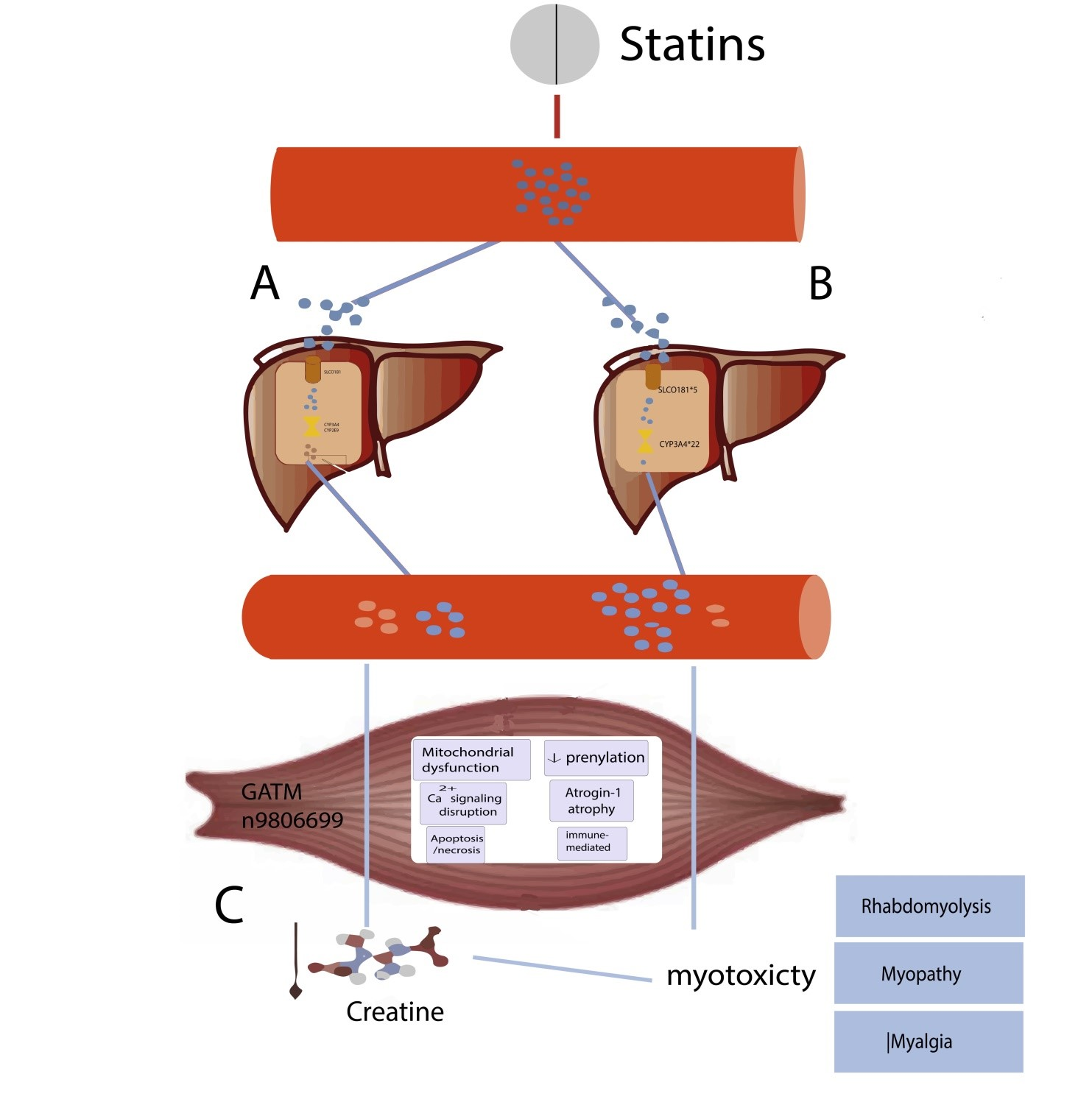
Hyperlipidemia, characterized by elevated levels of lipoproteins in the blood, is a significant public health concern due to its association with cardiovascular diseases like coronary artery disease (CAD) and stroke. Lipid-lowering agents mitigate the risks associated with hyperlipidemia, with statins, specifically 3-hydroxy-3-methylglutaryl-coenzyme A (HMG CoA) reductase inhibitors, being the frontline treatment. Atorvastatin is one of the most widely prescribed drugs of this class. However, the safety and efficacy of Atorvastatin vary among individuals. Despite the widespread use of statins, adherence to the regimen remains a challenge, with up to 50% of patients discontinuing treatment within the first year. Statin intolerance, often due to musculoskeletal symptoms, is a significant reason for nonadherence. Genetic factors play a substantial role in statin disposition and adverse events, adding to the complexity of treatment response. This review article will explore the pharmacogenetics of statins with particular emphasis on Atorvastatin, i.e., genetic polymorphisms in APOE, HMGCR, cytochrome P450 enzymes (CYP3A4, CYP3A5, and CYP2D6), CETP, LDLR, PCSK9, ABCB1, ABCG5/8, SLCO1B1, and KIF6, and the influence on its hypolipidemic outcomes. Understanding the impact of genetic polymorphisms can aid in predicting individual responses to statin therapy, optimizing treatment outcomes, and preventing adverse effects. By tailoring hyperlipidemia treatment based on genetic profiles, personalized medicine can be achieved, bringing us closer to optimal management and control of hyperlipidemia-related health risks
References
Downloads
Published
Issue
Section
License
Copyright (c) 2024 Fawad Ali

This work is licensed under a Creative Commons Attribution 4.0 International License.